TELL A STORY THEY BELIEVE
How to bluff (and how to catch one)
A bluff is a bet that only wins if your opponent folds. It works when the story your betting tells is one they believe and cannot afford to call. It fails against people who never fold, boards that help everyone, and faces that give the game away. Poker Call puts the faces back, so this page is half about betting and half about looking.
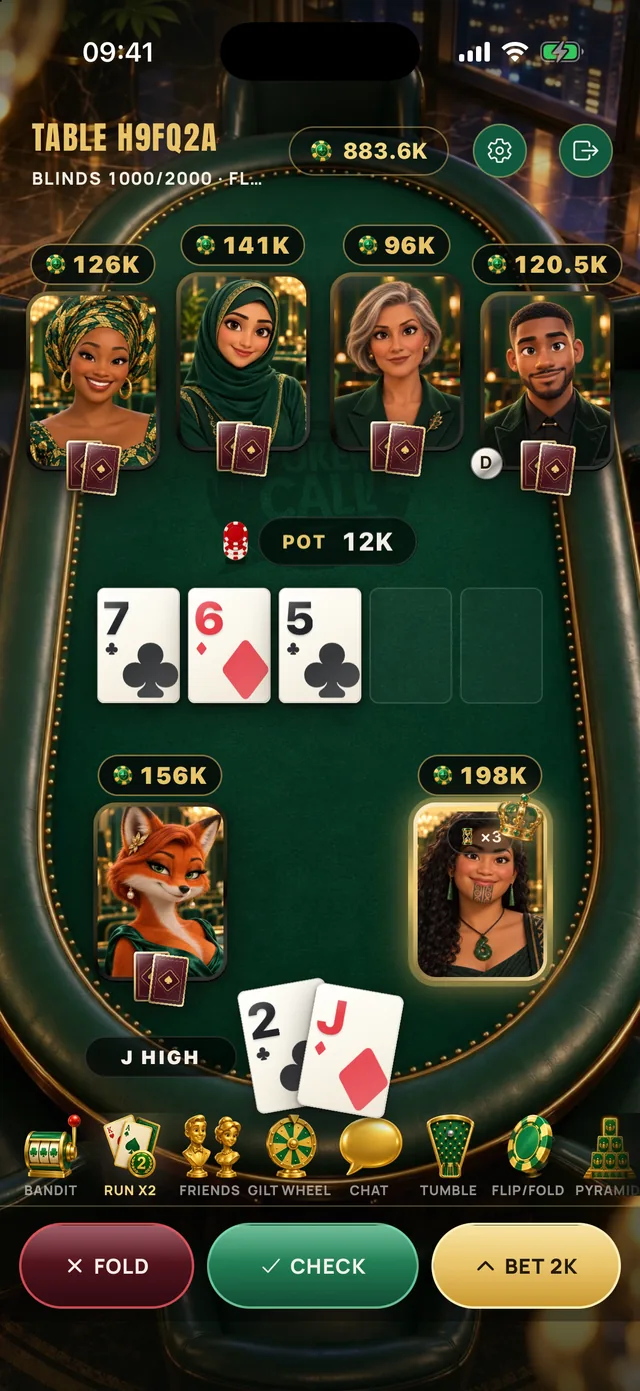
When a bluff can work
Against one or two opponents, not four. On boards that are scarier for them than for you: an ace or king on the flop when you raised before it, a third flush card, a paired board. Against players who have shown they can fold. With a betting line that makes sense from the first raise to the last, because a bluff that appears from nowhere on the river is the easiest call in poker.
Semi-bluffs are the good bluffs
Betting a flush draw or an open-ended straight draw is a bluff with a parachute: if they fold you win now, if they call you can still hit. Fifteen outs with two cards to come is a favourite against one pair, so a raise with a big draw is often the best play, not the brave one.
Size the bet to the story
A bluff should cost the same as the value bet you are pretending to make. If you would bet two-thirds of the pot with a set, bet two-thirds with air. Tiny bluffs get called out of curiosity; giant ones look like exactly what they are. Poker Call’s raise slider snaps to half pot and pot for this reason.
Tells, on camera
The classics are still true when the camera is on. Strong hands relax; bluffs go still, or suddenly talkative. A player who stares at the flop was not helped by it; one who glances at their chips probably was. The too-quick check, the sigh before a call, the smile that arrives a half-second late. None of these is proof. All of them are information, and you now have it.
Guard your own: decide what you are doing before the clock reaches you, and do the same thing with your face whether you have it or not.
Catching one
Ask three questions. Does their betting story make sense from start to finish? Would they really bet this much with the hand they are representing? Have they folded to pressure before, or do they show up with everything? If the story is broken and you have any pair, calling is usually right. If the story is perfect, believe it.
What bluffing is not
It is not bluffing every hand, bluffing players who cannot fold, or bluffing to look clever. The best bluffers bluff rarely and are believed when they bet, which is the real prize: their value bets get paid.
Questions
How often should you bluff in poker?
Rarely, and in the right spots: few opponents, a scary board, a consistent betting line, and against players who can fold. Semi-bluffs with draws should make up most of your bluffs.
What is a semi-bluff?
A bet with a hand that is not best yet but can improve, such as a flush draw. You win if they fold and you can still win if they call.
What are the most reliable poker tells?
Changes from a player’s normal behaviour: going still, a delayed smile, a glance at the chips after the flop, betting faster or slower than usual. On live video these are visible in a way they never were online.
Can you practise bluffing in Poker Call?
Yes. Practice tables use AI opponents that fold and call like people do, and every table is play-money, so a bluff that fails costs chips, never money.